
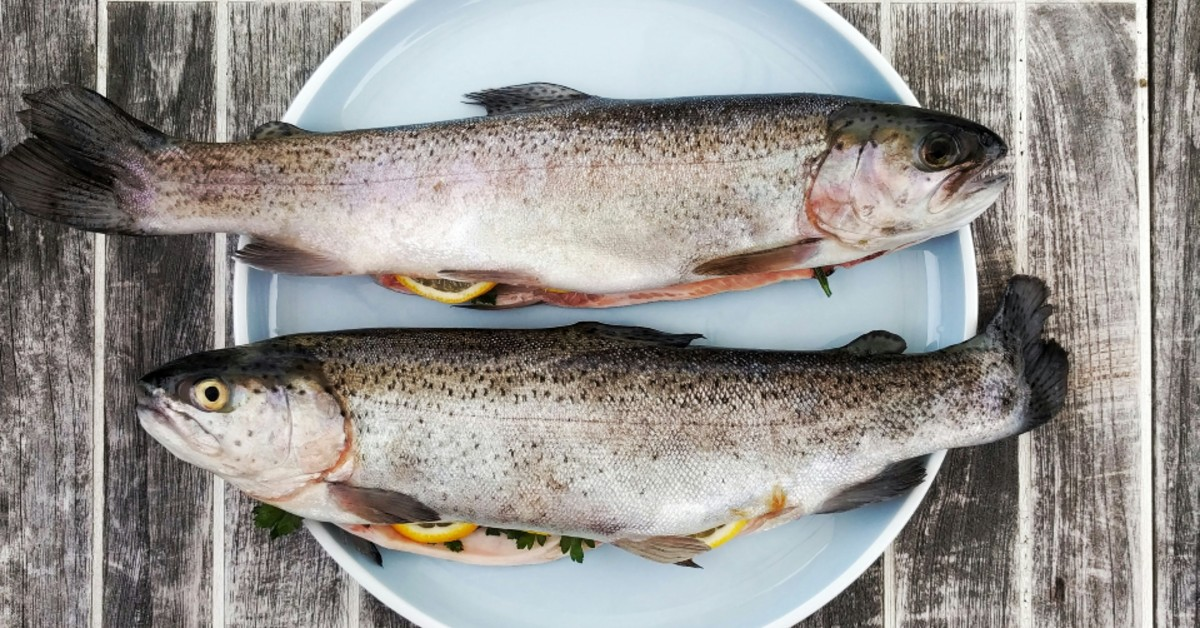
When you’re out hiking by a stream or casting your line into a lake, knowing the parts of a fish can make your catch even more interesting. Whether you’re curious about what helps a fish swim, breathe, or sense its world, this guide breaks down the parts of a fish and explains basic fish biology in a simple, clear way—plus it’s short enough to read before you hit the water!

External Parts of a Fish
When studying fish anatomy, the external features are the first thing you notice. These include fins, scales, gills, and other visible features that help fish survive.
- Fins – Tail fin for propulsion, dorsal/anal fins for balance, paired fins for steering. Some fish (like trout and catfish) have an extra adipose fin.
- Scales & Skin – Scales protect and help streamline swimming. Some fish have few or none. A slimy coating adds protection.
- Gills & Operculum – Gills allow fish to breathe, protected by a bony flap called the operculum.
- Mouth & Nares (Nostrils) – Mouth shape depends on diet. Nares are for smelling, not breathing.
- Eyes – Designed for underwater vision, often with wide angles of view.
- Lateral Line – A sensory line along the body that detects vibrations and movement.
- Vent – Opening for waste and reproduction, usually near the anal fin.
Internal Parts of a Fish
Just like with humans, internal parts of a fish are where most of the life-supporting systems work. These include the heart, organs, muscles, and skeleton.

- Skeleton & Spine – Supports the body and protects the spinal cord.
- Swim Bladder – Controls buoyancy; absent in sharks and rays.
- Heart & Circulatory System – A two-chambered heart pumps blood in a single loop.
- Digestive Organs – Stomach, intestines, pyloric caeca, and liver process food.
- Kidney – Filters waste and regulates water balance.
- Brain & Nervous System – Processes senses and controls movement.
- Gonads – Eggs in females, sperm in males; important for spawning.
- Muscle – Powers swimming (and is the part we eat).
Note:
Not all fish have every feature. For example, sharks don’t have swim bladders, and some deep-sea fish lack scales. Adaptations depend on where and how they live. This variety in basic fish biology is what makes different species so fascinating.
Quick Summary Table
| Category | Examples of “Parts of a Fish” |
|---|---|
| External | Fins, scales, gills/operculum, mouth, eyes, nares, lateral line, vent |
| Internal | Spine, swim bladder, heart, digestive organs, kidney, brain, gonads, muscles |
Closing Thoughts
The parts of a fish are both cool to know and helpful for fishing—on land or in water. Learning about fish anatomy and the external and internal parts of a fish gives you a deeper appreciation for every catch. Keep this guide handy next time you’re tracking that perfect hiking-spot stream or casting a line. Add your diagrams next, and you’re good to reel readers in!